Run site teams, projects and the AMC after handover
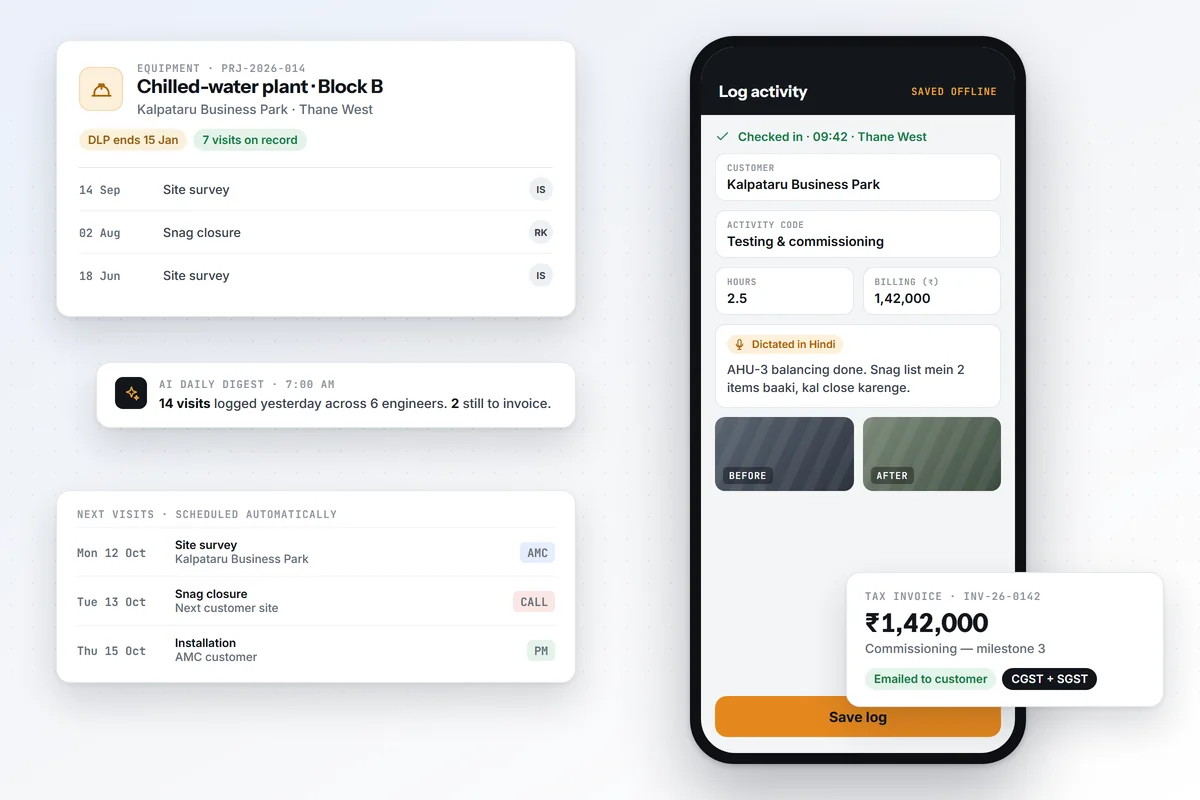
Plan days per project and see actual days as engineers log them. When the project is handed over, the same customer, equipment and team move straight into defect-liability visits and an AMC.
Made for: MEP, HVAC, electrical, fire and instrumentation contractors, EPC firms and engineering consultants who send engineers to sites.
Where the work and the money slip today
Engineers move between five sites a week and nobody knows how many days each project has really taken.
Snag and defect-liability visits are free, untracked, and argued about at handover.
The AMC that should follow every project is never written, so the revenue walks away.
A working day on Paimal, for Engineering, EPC & MEP firms
Planned vs actual, by projectPro
Set planned days per project and see actual days logged against them, so overruns show up while there is time to act.
Attendance, timesheets and leave
Engineers check in from their phone; timesheets, shifts, leave and payslips come from the same records.
Engineers log on an Android phone
Hours, what was done, the amount to bill and photos from site, entered on the job. Notes can be dictated in 9 Indian languages, and the app works with no signal.
AMC and PM visits schedule themselves
Set up each AMC once with its frequency — weekly, monthly or quarterly — and every preventive visit lands on the calendar with an engineer.
Logged work becomes a GST invoice
Quotes and invoices that follow your GST position, emailed to the customer, with what is paid and what is due on one screen.
Reports you can hand over
Export visits and hours for any period as a CSV for the customer, the auditor or your accounts team.
Visit types you can set up
- Site survey
- Installation
- Testing & commissioning
- Snag closure
- DLP visit
- AMC visit
Use these or name your own. Each one becomes an activity code your engineers pick on site.
What you keep on record
- Project and site
- Planned vs actual days
- Engineer hours per day
- Equipment handed over
- Snags and photos
Already in Excel? Import customers and equipment from a CSV in one go.
What a day on Paimal looks like
From a WhatsApp-and-Excel mess to visits that schedule themselves, engineers who log on site, and invoices that go out the same day.
Built to be trusted with your service business
Made in India for Indian service companies: rupee pricing, GST invoices, Indian languages, and monthly billing you can cancel any time.
Your data stays yours
Every request is scoped to your company, and company isolation is checked on every data access. Export your records as CSV whenever you like.
GST-ready invoices
Tax invoice, bill of supply or plain invoice, depending on your GST position. Your CA should confirm which applies to you.
Invoices customers can verify
Every invoice carries a code your customer can check at paimal.com/verify, so a forged bill is easy to spot.
Works where your engineers work
Basements, plant rooms and rooftops. The Android app saves the log offline and sends it when the signal returns.
In your engineers’ language
Notes can be dictated in 9 Indian languages, so the report gets written even by people who hate typing.
A person to talk to
Every trial gets a free 15-minute setup call with the founder. Founding customers get their Excel data imported for them.
Common questions
Is this project-management software?
No. Paimal tracks the people and the visits: who was on which site, for how long, against how many days you planned, and what was billed. Keep your drawings and BOQs where they are.
Can we bill by milestone?
Yes. Raise a quote, then GST invoices against it for each milestone or visit.
How long does it take to get started?
Most teams are logging visits on day one. Import customers from Excel, add your engineers, and they install the Android app. Every trial gets a free 15-minute setup call.
What does it cost?
Starter is ₹299 and Pro is ₹399 per active team member per month, billed monthly. The first 14 days are free and no card is needed.
Is our data safe?
Every request is scoped to your company. Your data is never exposed in the browser, and company isolation is checked on every data access.